


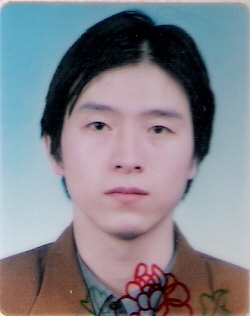
Brief Introduction
Henghua Deng received the M.A.Sc. degree in electronics from Peking University (Beijing University), Beijing, China, in 2000 and the Ph.D. degree in electrical and computer engineering (ECE) from the University of Waterloo, Ontario, Canada, in 2005. From 2005 to 2006, he held postdoctoral research positions in physics and ECE departments at the University of Waterloo. From 2006 to 2007, he held an NSERC Fellowship (NSERC -- Natural Science and Engineering Research Council of Canada) at the Integrated Manufacturing Technologies Institute (IMTI), National Research Council Canada (NRC). Since 2007, he worked with Infinera Corporation, Maryland, and CyOptics, New Jersey, United States.
He is currently designing planar lightwave circuits for optical communication networks. His previous research experiences are as follows: (1). His Master's thesis at the National Optical Communication Laboratory, Peking University, studied reconfigurable optical add-drop multiplexers (OADMs) in all-optical networks (AONs). He introduced arrayed-waveguide grating (AWG) devices into OADMs and improved their crosstalk and loss performances in communication networks. (2). His PhD research at the University of Waterloo was mainly on computational electromagnetics (EM). His Ph.D. dissertation developed a sophisticated and versatile finite-element method (FEM) software package, including both guided-mode and beam-propagation-method (BPM) analysis for various photonic and microwave devices. He proposed general design procedures for asymmetric polarization rotators on both III-V and silicon-on-insulator (SOI) semiconductor material systems. (3). His postdoctoral research at the University of Waterloo includes radio-wave propagation in vehicular radio networks, antenna design, EM software simulation, split-operator and finite-difference beam propagation methods, finite-difference time-domain method (FDTD), ray tracing technique, and photonic bandgap (PBG) devices. (4). His research at the National Research Council Canada is in the areas of nanofabrication, nanophotonics, biophotonics, plasmonics, surface plasma resonance (SPR), nano-sensors, chemical and bio-Sensors. (5). His current research interest includes: i).photonic integrated circuits for fiber-optical communication networks; (ii).computational electromagnetics (FEM, FDM, FDTD, CMT, etc.) and software simulation; iii). microwave and photonic devices (antenna, polarization controller, waveguide router, etc.); iv). biomedical and chemical sensors; and v). nanofabrications and nanocharatcerization, etc.
Dr. Deng is a licensed Professional Engineer (Ontario, Canada), a Member of the Institute of Electrical and Electronics Engineers (IEEE) and the Optical Society of America (OSA). He is an active reviewer for prestigious IEEE and OSA journals, including: IEEE/OSA Journal of Lightwave Technology, IEEE Photonic Technology Letters, The Journal of the Optical Society of America A (JOSA A), JOSA B, Applied Optics, Optics Letters, Optics Express, and IEEE Transactions on Vehicular Technology.
 TOP